Objectives
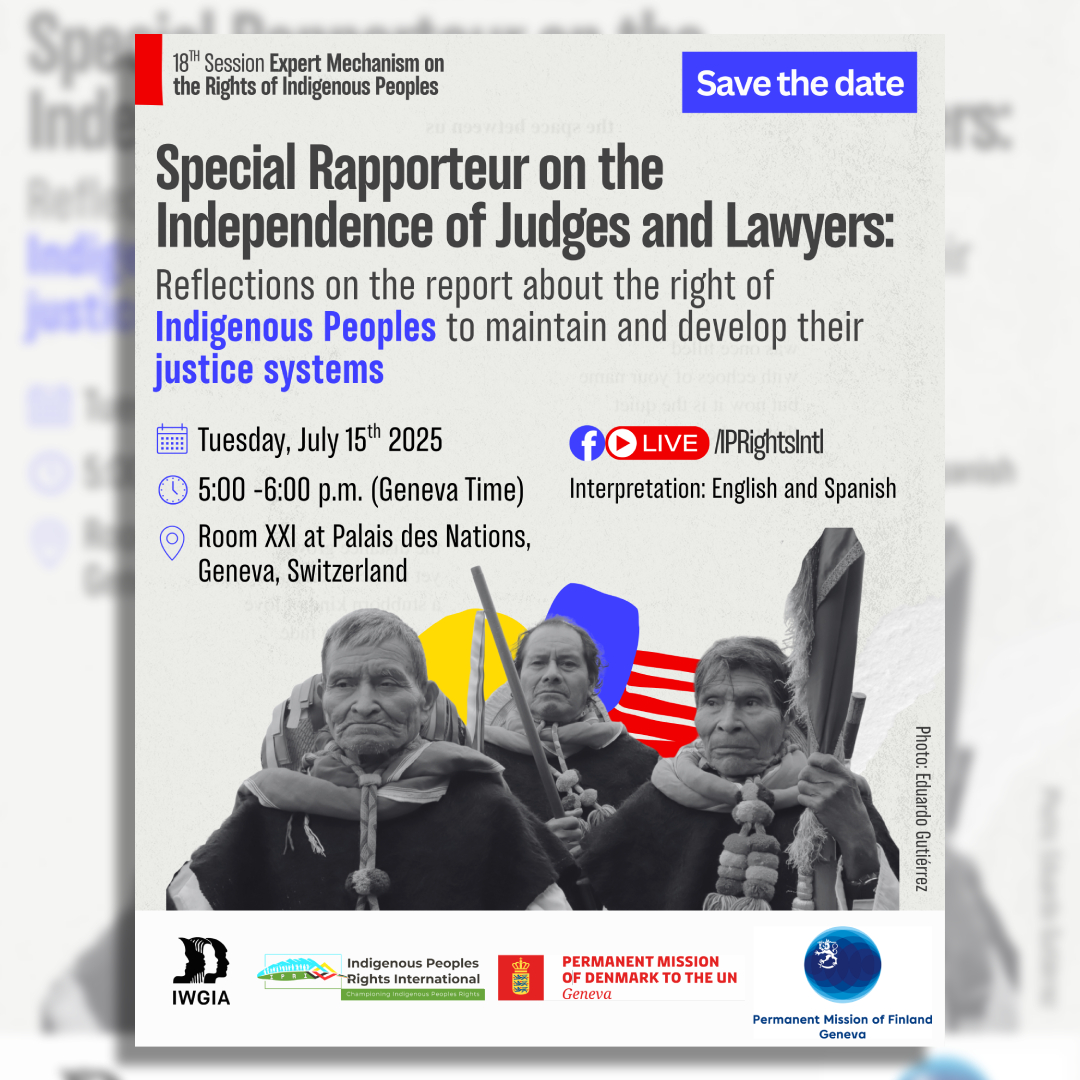
This side event aims to facilitate an in-depth discussion on the findings of the report by the Special Rapporteur on the Independence of Judges and Lawyers, with a specific focus on the right of Indigenous Peoples to maintain and develop their own justice systems.
The event will:
Foster dialogue between Indigenous experts, policymakers, UN representatives, and Member States.
Highlight the critical role of Indigenous governance and legal systems in resolving disputes and promoting human rights.
Identify concrete pathways for implementing the report’s recommendations at national and international levels.
Promote stronger collaboration in support of Indigenous-led justice initiatives.
Format
Opening Remarks: Prof. Margaret Satterthwaite, Special Rapporteur on the Independence of Judges and Lawyers
Presentation of Key Report Themes
Panel Discussion: Indigenous leaders, legal experts, and international representatives
Interactive Dialogue: Audience engagement and Q&A
Closing Reflections and Recommendations
Participants
Moderator
3–4 Expert Speakers, including:
Prof. Margaret Satterthwaite, UN Special Rapporteur on the Independence of Judges and Lawyers
One Indigenous Judge (tentatively Gregory Bigler – to be confirmed)
Indigenous Congresswoman Mariana Yumbai Yallico (TBC)
Albert Barume, UN Special Rapporteur on the Rights of Indigenous Peoples (TBC)
Ekhyin Chowdhury, CHT Bangladesh
Member State Representatives (Denmark, Finland)
Civil Society Representatives and Indigenous Activists
Background
The forthcoming presentation of the report by Prof. Margaret Satterthwaite, Special Rapporteur on the Independence of Judges and Lawyers, at the EMRIP session offers a timely opportunity to bring together Indigenous experts, policymakers, and human rights advocates to reflect on its findings and implications.
Co-organized with Indigenous Peoples Rights International, this side event provides a platform to:
Explore the report’s key messages
Share lived experiences and good practices from Indigenous leaders and State actors
Foster dialogue around strategies for strengthening recognition of Indigenous justice systems
Human rights standards affirm Indigenous Peoples’ rights to equality before the law and to maintain, strengthen, and revitalize their own justice systems—core elements of their right to self-determination. As the Special Rapporteur on the Rights of Indigenous Peoples has emphasized, “Access to ordinary justice continues to be severely limited for Indigenous Peoples” (A/HRC/42/37). While Indigenous justice systems have proven valuable in resolving disputes and protecting rights, they still receive insufficient recognition and support.
This event will serve as a space for Indigenous voices to:
Share perspectives and successful initiatives
Engage with Member States and international bodies on practical solutions
Spotlight the situation of Indigenous women in relation to justice systems
Identify steps for implementing the UN Declaration on the Rights of Indigenous Peoples (UNDRIP), advancing Sustainable Development Goal 16, and fulfilling the UN system-wide action plan on Indigenous rights
By showcasing good practices and acknowledging ongoing challenges, the event aims to build coalitions, inspire policy reform, and strengthen access to justice for Indigenous Peoples globally.